
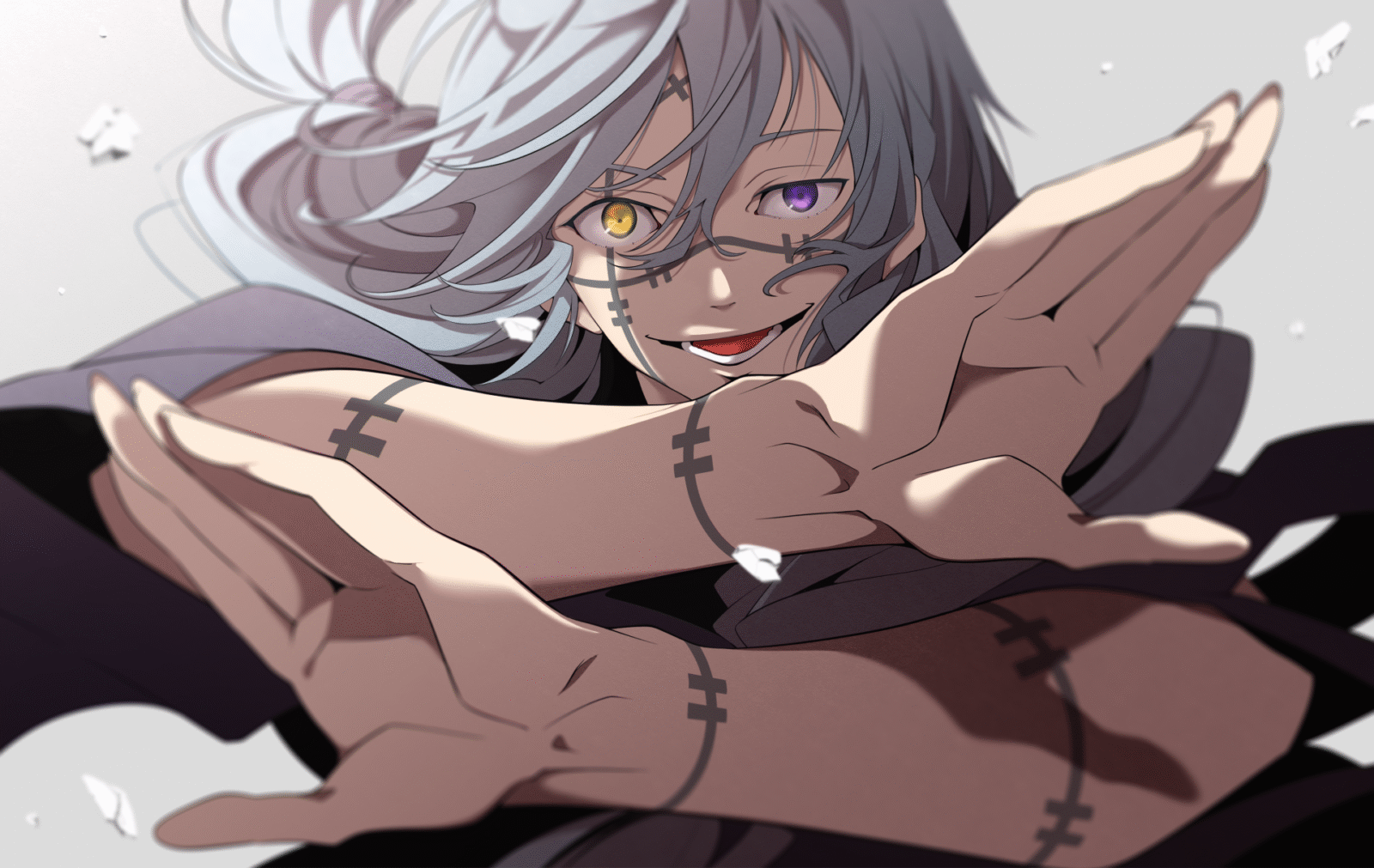
Mahito is one of the most disturbing characters in Jujutsu Kaisen, not because he is powerful, but because of how personal his cruelty feels. Many villains in the series cause chaos, but Mahito takes joy in it. He mocks suffering, treats death like a game, and hurts people in ways that feel intentional and intimate. That combination makes him harder to watch and harder to forget.
What makes Mahito work so well is that he is not just a monster. He is a reflection of humanity itself, shaped by fear, hatred, and violence. His role in the story goes far beyond being an enemy. He exists to challenge the ideas of morality, value, and what it truly means to be human.
Who Mahito Is
Mahito is a special grade cursed spirit born from human fear, specifically the fear people have of each other. He exists because humans hurt one another, and that origin defines everything about him. Unlike curses that act on instinct, Mahito thinks, learns, and adapts. He understands emotions and uses them as tools.
He does not hide what he is or why he exists. Mahito fully accepts his nature and enjoys expressing it. That honesty, paired with his cruelty, makes him especially unsettling.
Why Mahito Feels So Cruel
Mahito’s violence is not rushed or careless. He takes his time. He mocks his victims, laughs during moments of horror, and treats suffering as entertainment. His childish behavior makes his actions feel even worse because he never treats death with seriousness or respect.
This is why he feels more hateful than other villains. He makes everything personal. His cruelty is not distant or philosophical. It is direct, playful, and deliberate.
A Curse Made From Human Darkness
Mahito represents the worst parts of humanity. He is made from cruelty, malice, hatred, and a total lack of empathy. These emotions give him strength, and that strength suggests how deep and widespread those feelings are among humans.
Even though he despises humanity, he depends on it. He would not exist without human negativity. That contradiction sits at the core of his character. He destroys humans using the very emotions they create.
His View on Life and Death
Mahito does not believe life has inherent value. To him, existence is simple. People are born, they suffer, and they die. There is no deeper meaning behind it. Because of this belief, he does not value his own life very highly. His survival matters less than the success of cursed spirits as a whole.
This view explains why he acts so freely. If life has no meaning, then cruelty has no cost.
His Obsession With the Soul
One of Mahito’s defining traits is his fixation on the soul. He believes the soul comes before the body, and that the body only exists to reflect the soul’s shape. This belief fuels his cursed technique, Idle Transfiguration, which allows him to reshape the soul and, in turn, the body.
His experiments on others are not just acts of sadism. They are also attempts to understand the nature of existence. By observing how people change under fear and despair, Mahito learns
Why Yuji Matters So Much
Yuji Itadori is Mahito’s main focus. While other humans serve as tools or experiments, Yuji represents something Mahito wants to erase. Yuji values life and believes it is worth protecting, even when it costs him personally.
Mahito targets Yuji repeatedly because he wants to prove that those ideals are false. He believes that if he pushes Yuji far enough, Yuji will break and accept that they are the same at their core. If that happens, Mahito’s worldview wins.
Mahito as a Mirror to Humanity
Mahito acts as a mirror that reflects humanity’s darkest traits back at itself. He does not pretend to be moral or justified. He believes his existence proves his point that humans are cruel by nature.
In this way, Mahito is one of the most honest characters in the series. He openly shows what he believes humanity truly is by forcing others to face suffering and despair.
The Paradox Between Mahito and Yuji
Yuji and Mahito represent opposite sides of humanity. Yuji shows compassion, perseverance, and growth. Mahito shows cruelty, malice, and destruction. Both are deeply human, just directed toward different ends.
Mahito insists they are the same, and in some ways, he is right. The difference is how they respond to that truth. Yuji accepts it and grows. Mahito embraces it and stagnates.
Mahito Final Moment
Despite claiming life has no value, Mahito panics when faced with his own death. He clings to life and shows fear, revealing a deep hypocrisy. In that moment, he becomes more human than ever.
That fear exposes the weakness behind his philosophy. When forced to face the same end he inflicted on others, he reacts just like any human would.
What Mahito Represents in Jujutsu Kaisen
Mahito represents the harsh reality of the series’ world. Life and death are random. Curses are born from humans, cause suffering, and are eventually destroyed. There is no grand meaning behind it.
Mahito is not special. He is inevitable.
Why Yuji Will Always Remember Mahito
Mahito claims he will forget Yuji, but the opposite is true. Yuji will never forget Mahito. The conflict shapes how Yuji understands death, humanity, and his own role in the world.
Mahito becomes a lesson rather than a victory. That is why Yuji moves forward while Mahito does not.
FAQ
Who is Mahito in Jujutsu Kaisen
Mahito is a special grade cursed spirit born from human fear and hatred.
What does Mahito symbolize
He symbolizes the darkest parts of humanity and the cruelty people create.
Why is Mahito obsessed with Yuji
Yuji represents the humanity and moral values Mahito wants to destroy.
What is Idle Transfiguration
It is Mahito’s cursed technique that allows him to reshape souls and bodies.
Why is Mahito considered human
Because his fear, hypocrisy, and cruelty mirror real human behavior.